Service NSW
Transforming the State’s digital notifications
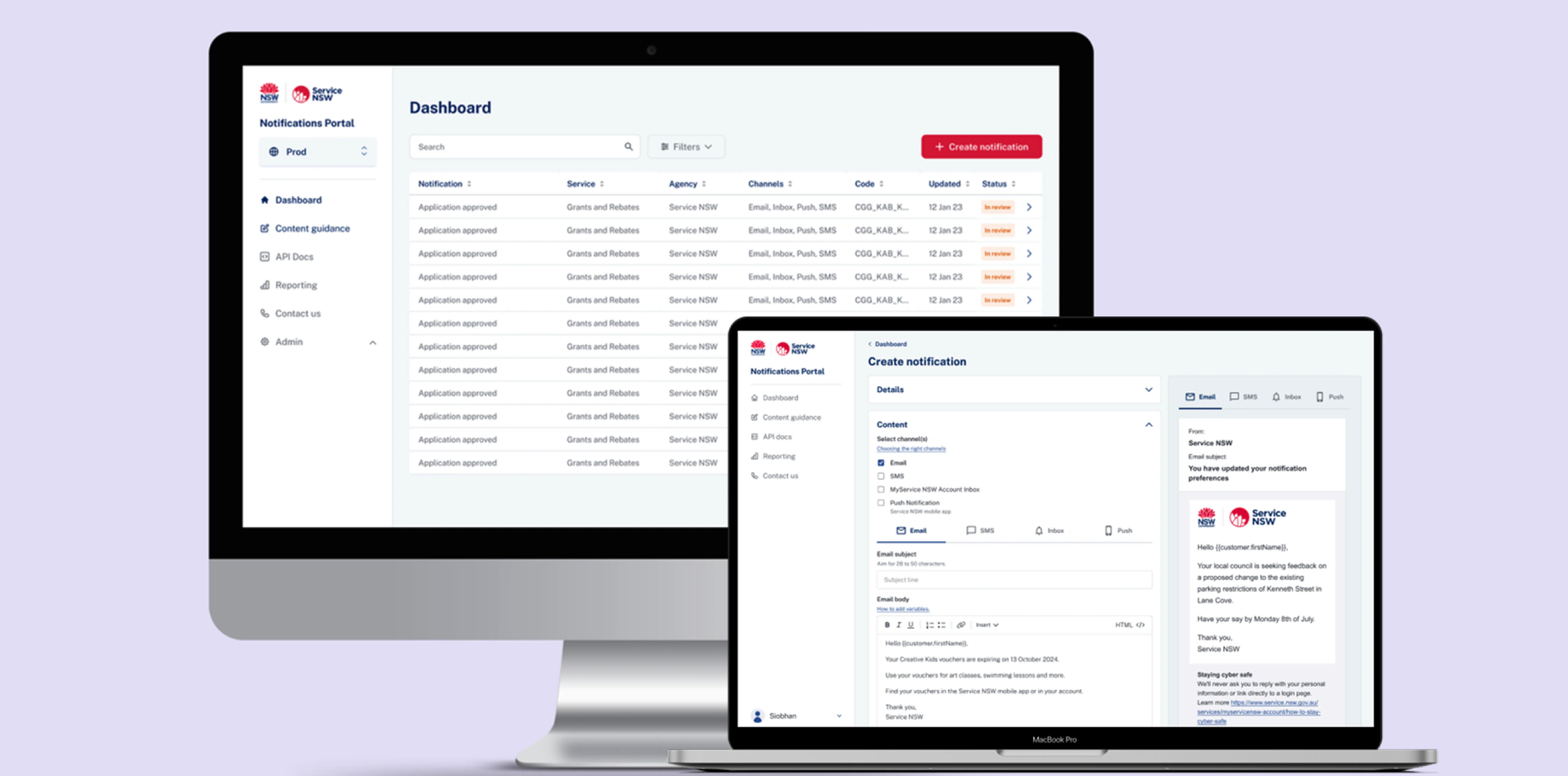
NSW Government agencies relied on traditional post to reach citizens: slow, costly, and unreliable. Email, SMS, and in-app notifications were meant to fix that, but the system for sending them was fragmented, insecure, and hard to use.
My job was to turn an underused platform into something simple, trusted, and scalable enough for every agency to run on.
I owned UX strategy and execution end to end—design thinking, the design system, research, and mentoring junior designers—working with Product, Engineering, and Content to balance user needs against compliance and business goals.
Turn an underused platform into something simple, trusted, and scalable.
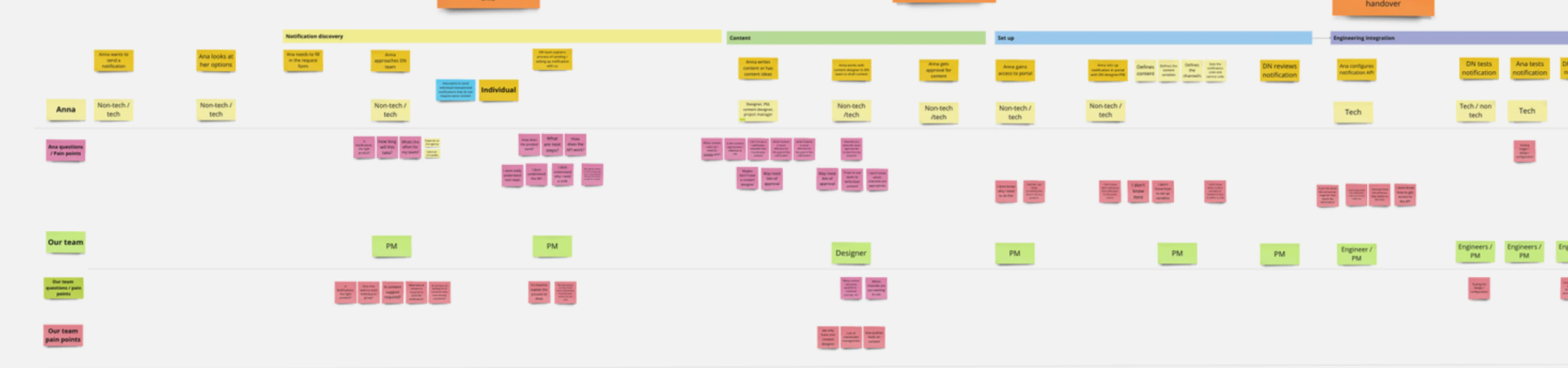
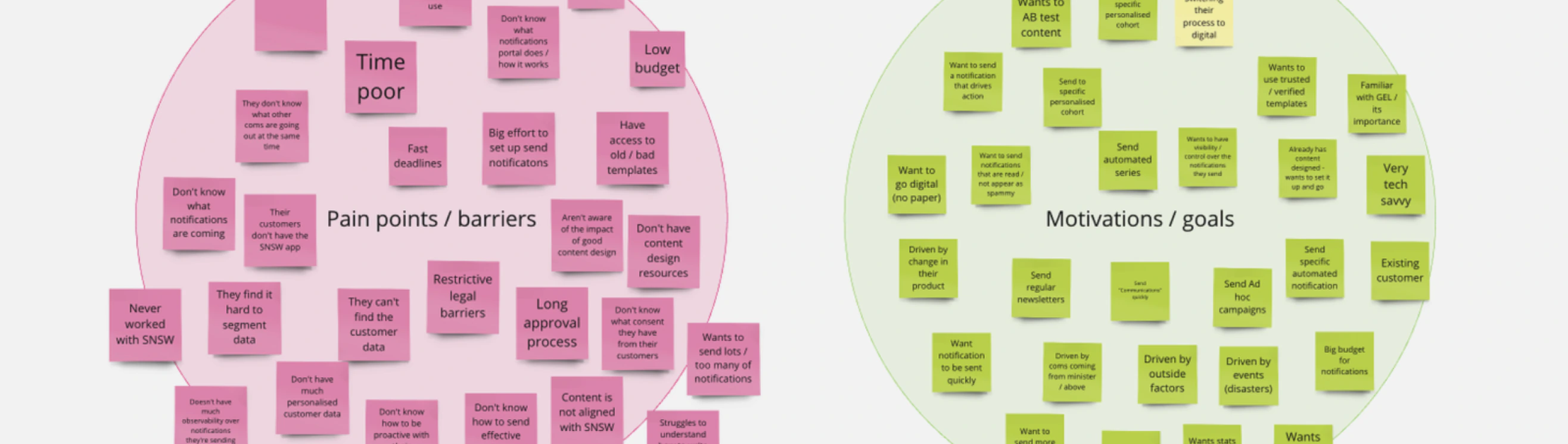
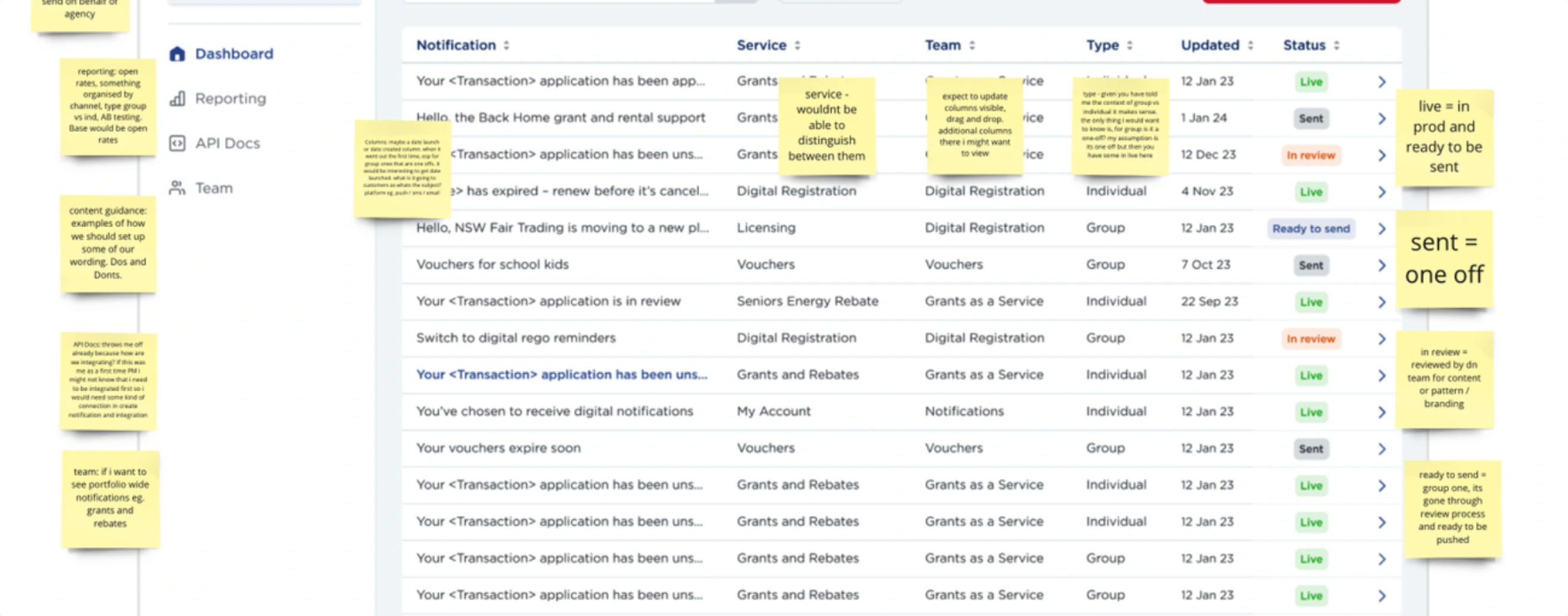
When I joined, nobody could clearly say who the product was for or how it was actually being used. I audited the portal, mapped workflows, and ran workshops to separate what the team believed about users from what was true.
That produced the real question: how do staff send notifications quickly and reliably across roles and technical ability, on a foundation that scales, without breaking compliance and security?
I ran 14 interviews across departments and seniority levels, deliberately including people who had never touched the portal so the research did not simply confirm existing habits.
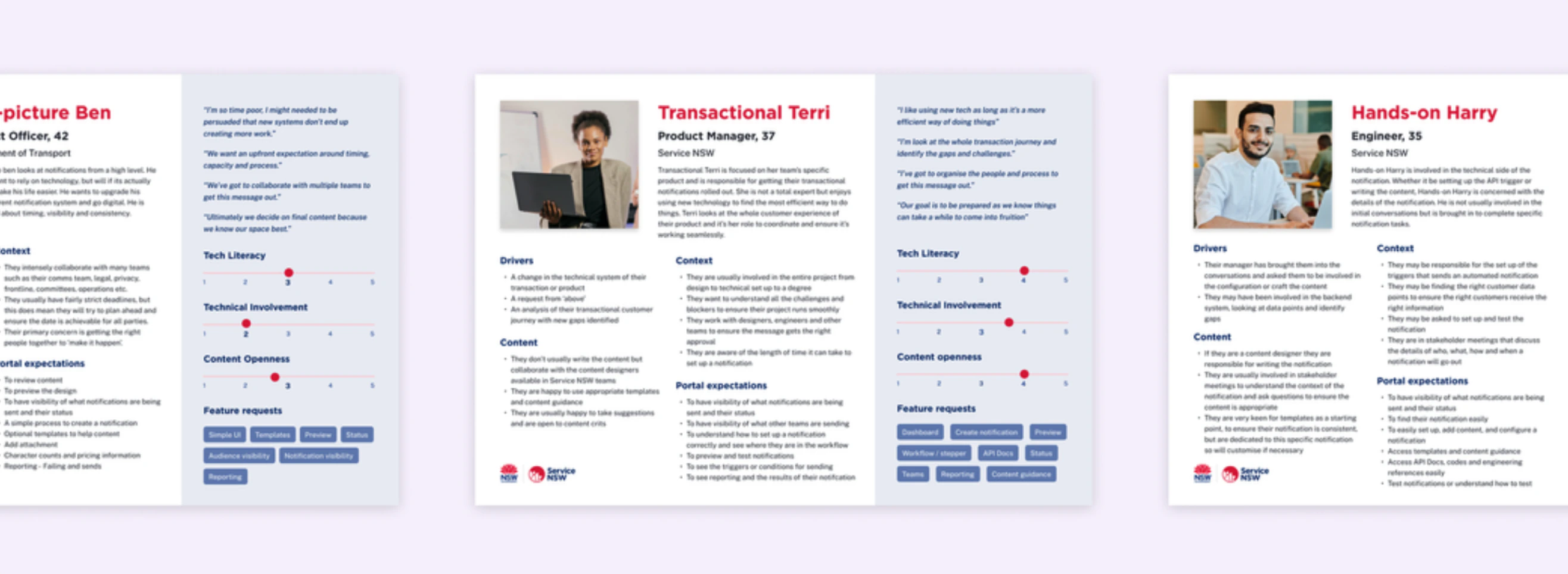
Three personas came out of it, each with different goals and constraints when sending a notification.
To separate what the team believed about users from what was true.
Designing one shared workflow instead of dozens of exceptions.
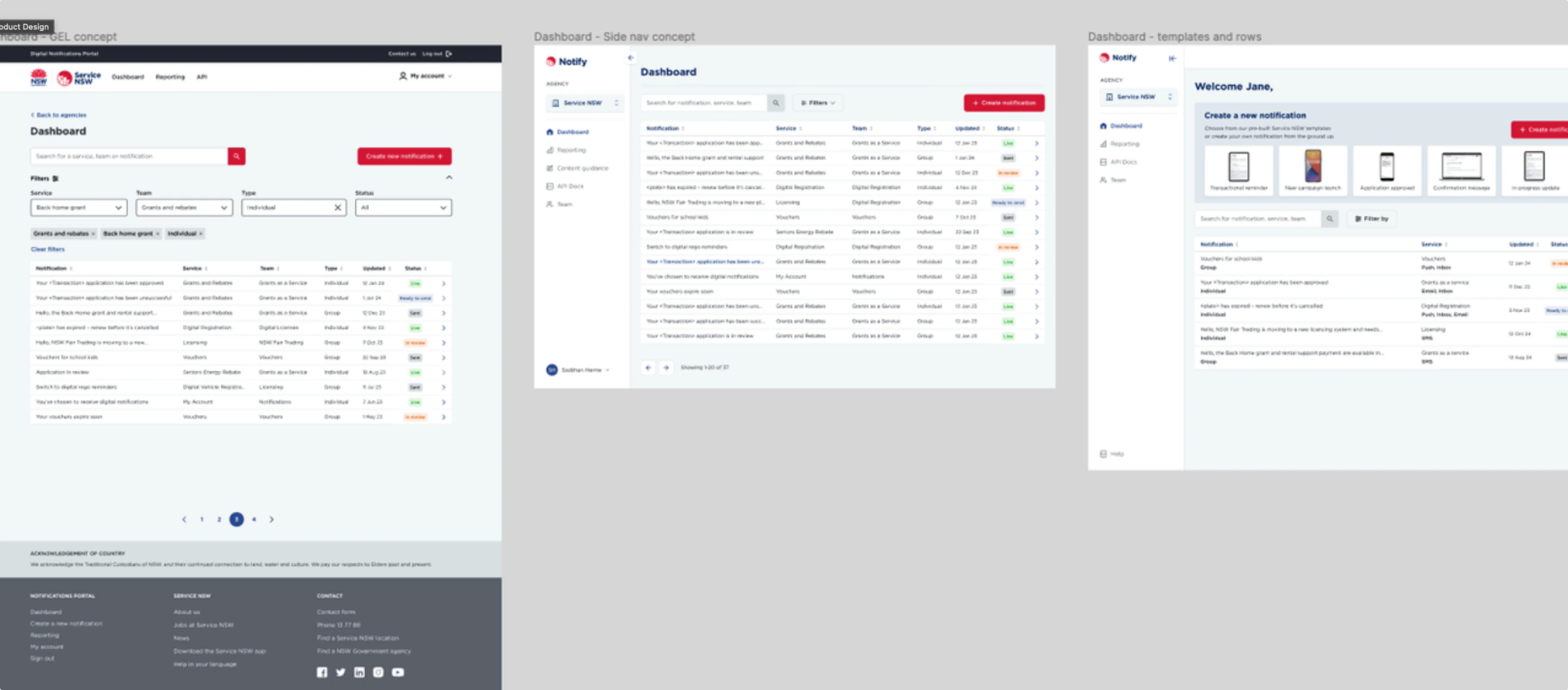
I sketched flows, wireframes, and dashboard concepts using Jobs-to-Be-Done, exploring multi-agency workflows, quick notification creation, and ongoing management without breaking processes agencies already ran.
Presenting the work to stakeholders, I walked them through the research and reasoning rather than defending one design. That is what got two concepts through to testing instead of one being picked on preference.
Breaking that habit was the real fight.
The organisation had a habit of treating every agency request as a new feature. I reframed individual asks as patterns, looking for the shared workflow underneath them before anything entered the roadmap.
That protected the product from becoming a collection of one-off exceptions.
I made the case with the interview data itself: instead of treating each agency’s ask as unique, I clustered what people were actually describing across departments and technical maturity levels.
That reframing let us build toward a scalable foundation instead of accumulating features that would eventually become unmaintainable.
The existing Government design system was built for citizen-facing products—solid, but too large and bulky for an internal tool used by people who did not need that much hand-holding.
I used it as a base and built sleeker, more capable components only where it fell short.
- 37% increase in user engagement
Rapid usability testing refined dashboards, creation flows, and navigation. The Government design system remained the foundation; custom components were introduced only where these technically confident internal users genuinely needed them.
The redesign delivered a simpler, more compliant notification process across agencies.
Designed for a more technically confident internal user.
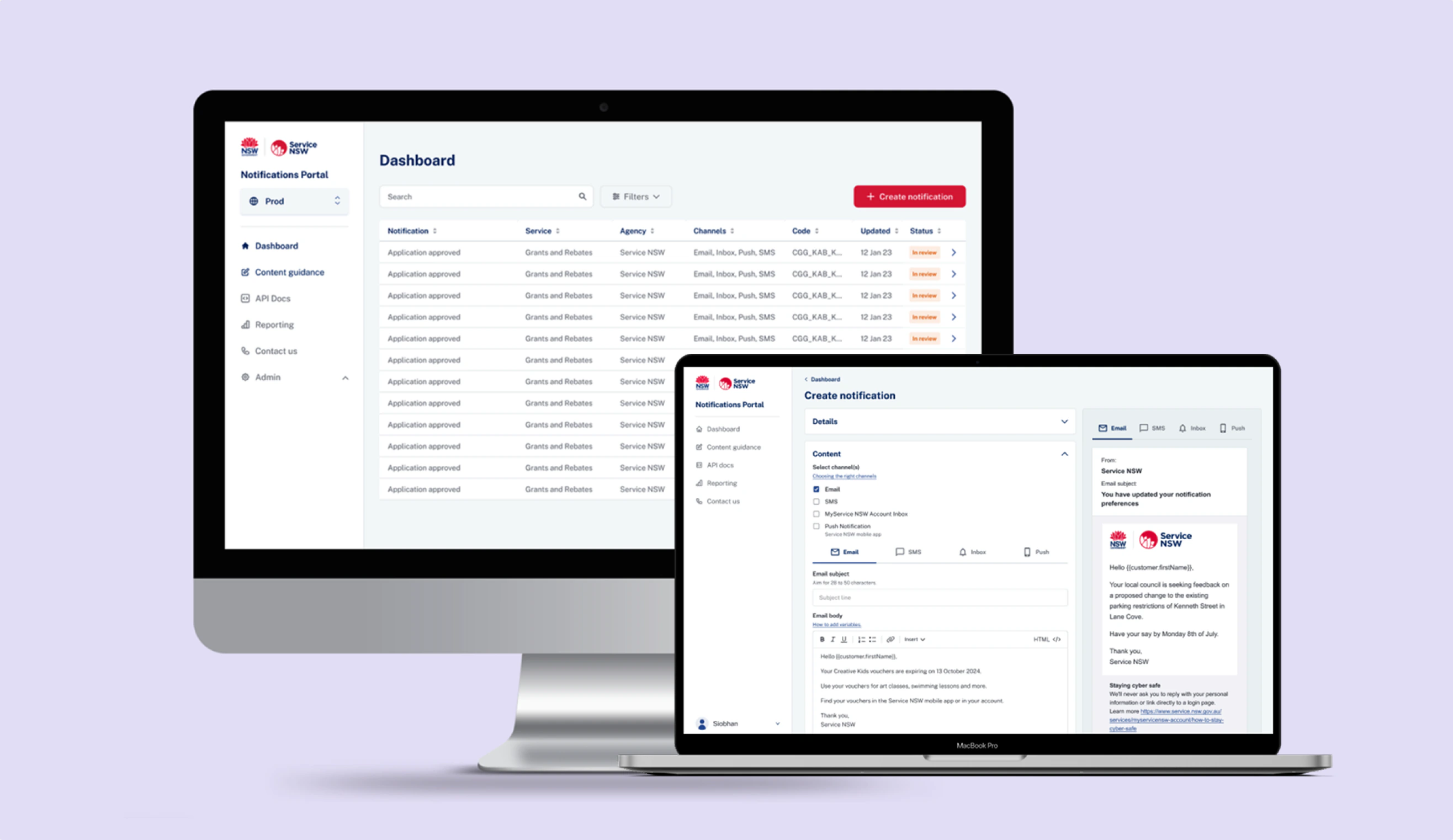
The redesign delivered a simpler, more compliant notification process across agencies and increased user engagement.
If I did it differently, I would build the pattern check into intake so every request starts with evidence of scope, rather than relying on someone catching the drift later.