Airalo
Accelerating Activation: Redesigning the Partner Onboarding Journey
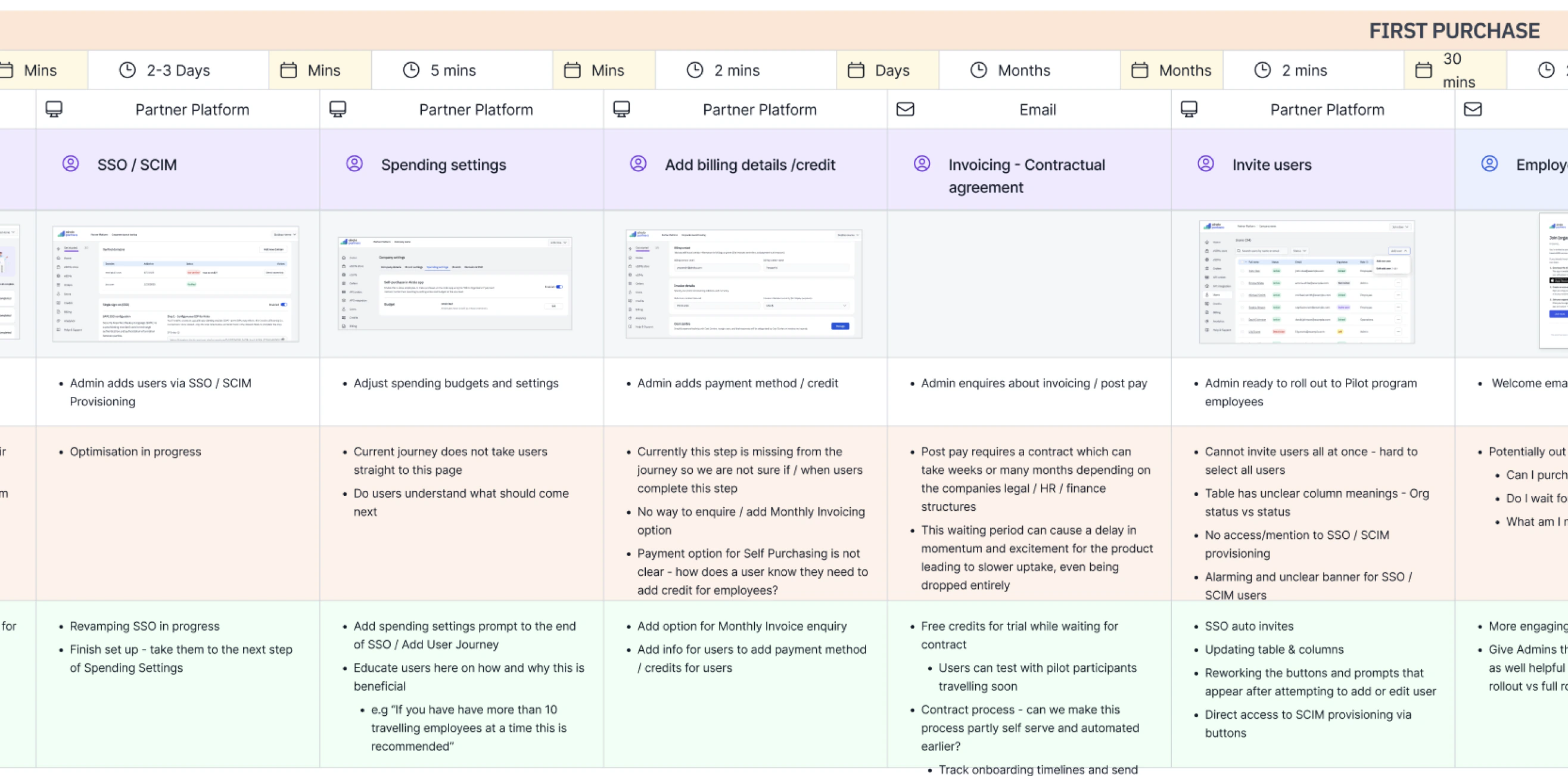
Airalo’s B2B platform connects global businesses with eSIM solutions for their teams.
But only 43% of onboarded partners ever reached their first purchase—the moment the whole relationship was supposed to pay off. Most partners never got there.
I led research, strategy, and end-to-end design for the partner onboarding and activation journey, working with Growth Marketing, Product, and Data to find the conversion barriers and design our way through them.
Only 43% of onboarded partners ever reached their first purchase.
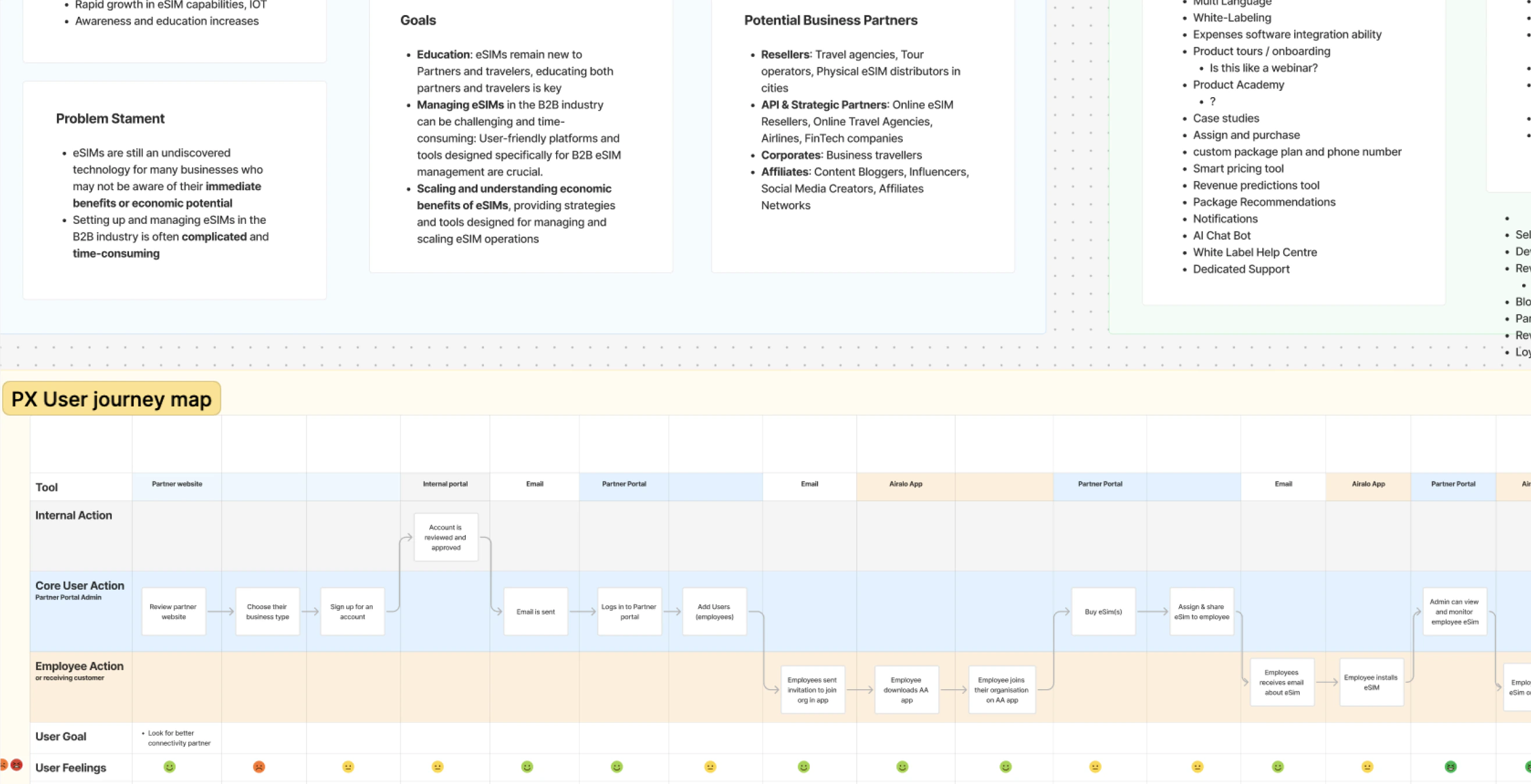
Before formal discovery, I traced the funnel with the data and partnerships teams. Conversations with sales and support added the texture the numbers could not: admins stuck in manual invite flows, employees unclear on next steps, and no visibility once an invite went out.
This was not a motivation problem. It was friction at specific, findable points.
- 43% of onboarded partners completed a first purchase
- 62% of invited employees accepted their invite
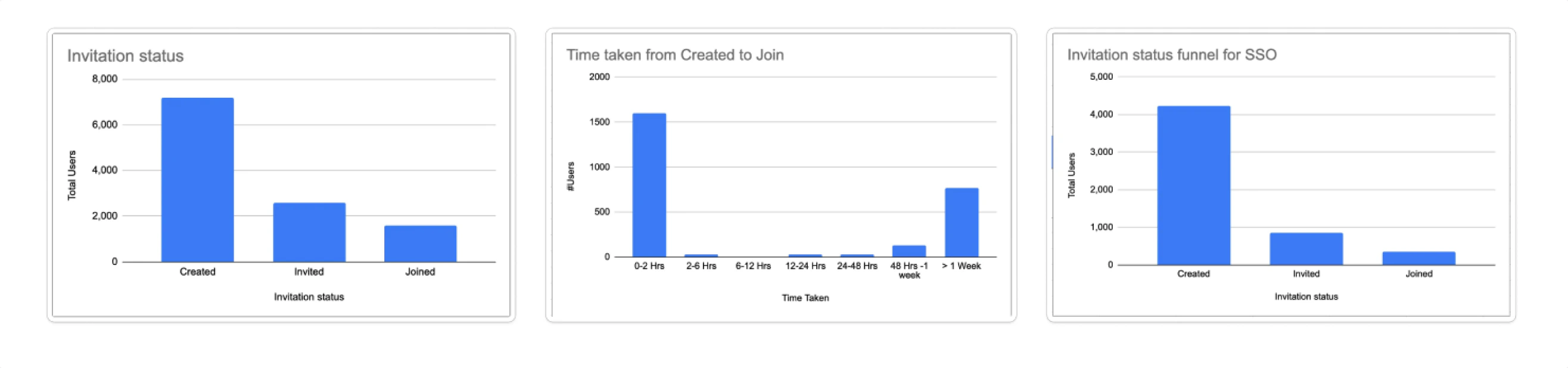
- Users invited within two hours were twice as likely to join
Interviews and a survey across admins, employees, and internal teams revealed two failure points: the admin invite flow, stalled by manual work and unclear next steps, and the employee join flow, where users dropped off unsure how to join or access their eSIMs.
Quantitative and qualitative work reframed the challenge: fix both sides of the journey in parallel, or neither improvement would move the number that mattered.
Users invited within 2 hours were twice as likely to join as those invited a week later.
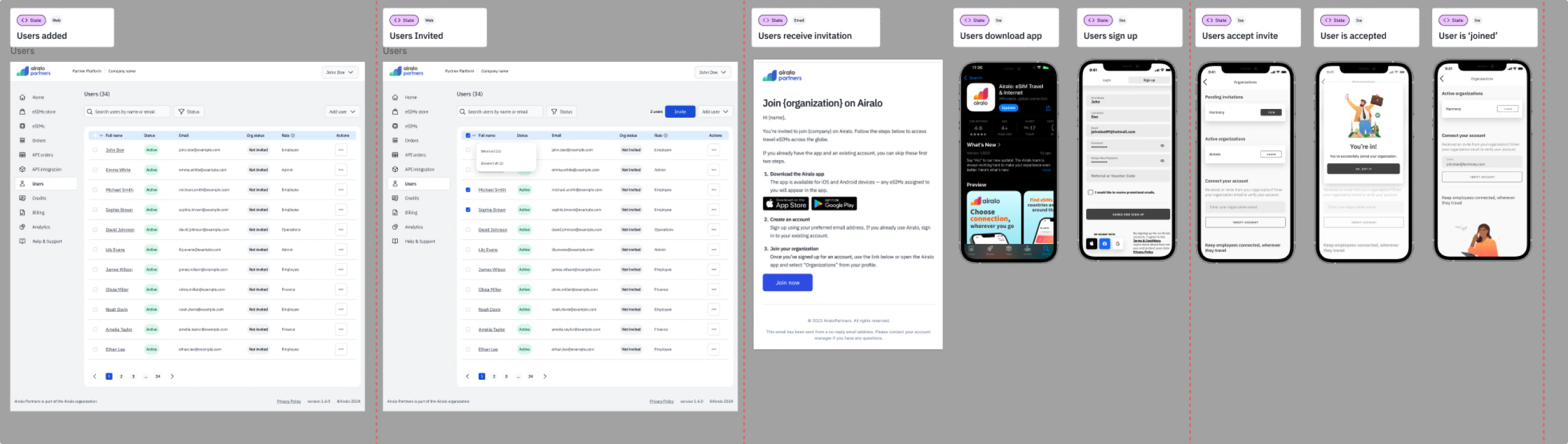
High-impact, low-effort, ship fast, measure fast.
With both failure points mapped, I worked from the admin and employee perspectives at the same time, aiming to remove friction, automate intent, and build trust through clarity rather than more UI.
Three quick-win opportunities emerged: auto-invite users when they are added, auto-link employees on first sign-in, and let admins assign eSIMs before activation.
The bet was deliberately narrow: high-impact, low-effort, ship fast, measure fast—rather than a bigger redesign that would take longer to prove out.

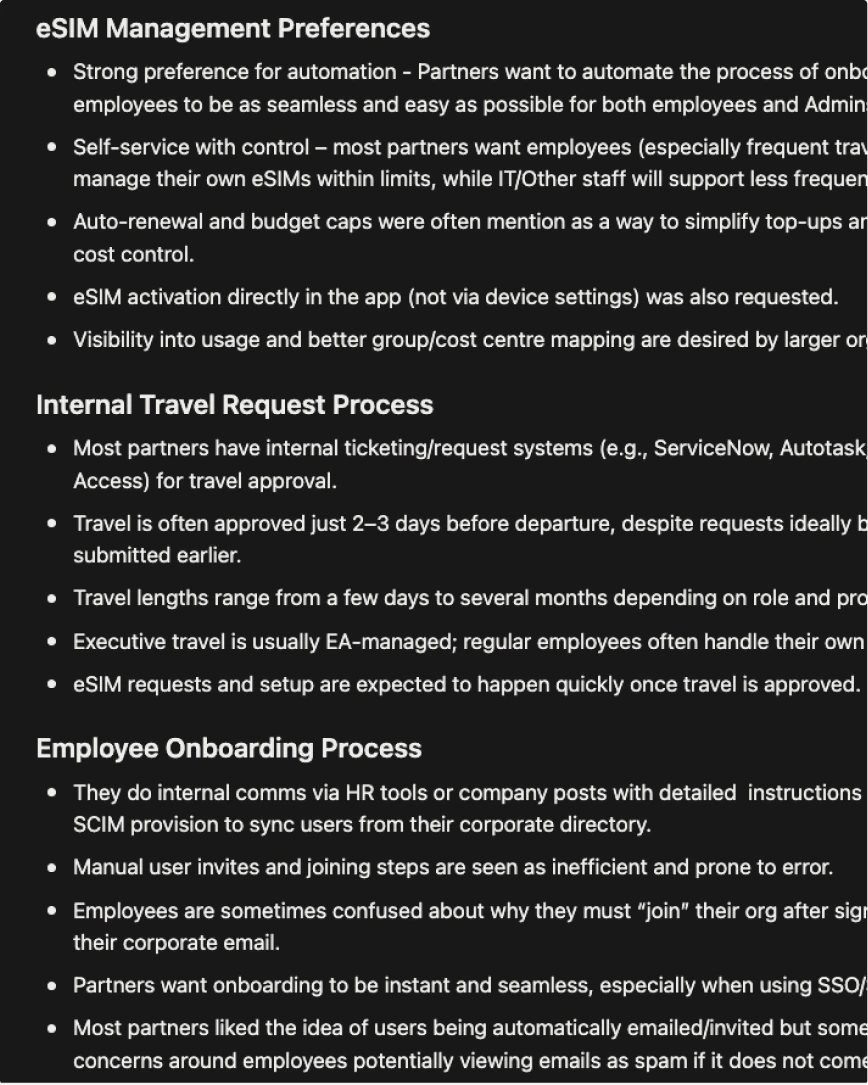
Made the case on the numbers rather than the interface.
Removing the “Join Organization” step meant reworking a roadmap other teams had already planned around. I made the case with the funnel data—the 43% conversion and the two-times invite-speed effect—rather than relying on a mockup.
The evidence secured agreement to prioritise auto-invite and remove the redundant join step.
Getting it over the line meant a trade: I committed to sharing results as soon as the metrics were reliable, making the roadmap change a visible and accountable bet.
Together with Engineering, we shipped the change with end-to-end tracking so we could measure its effect on both employee joins and first purchase.
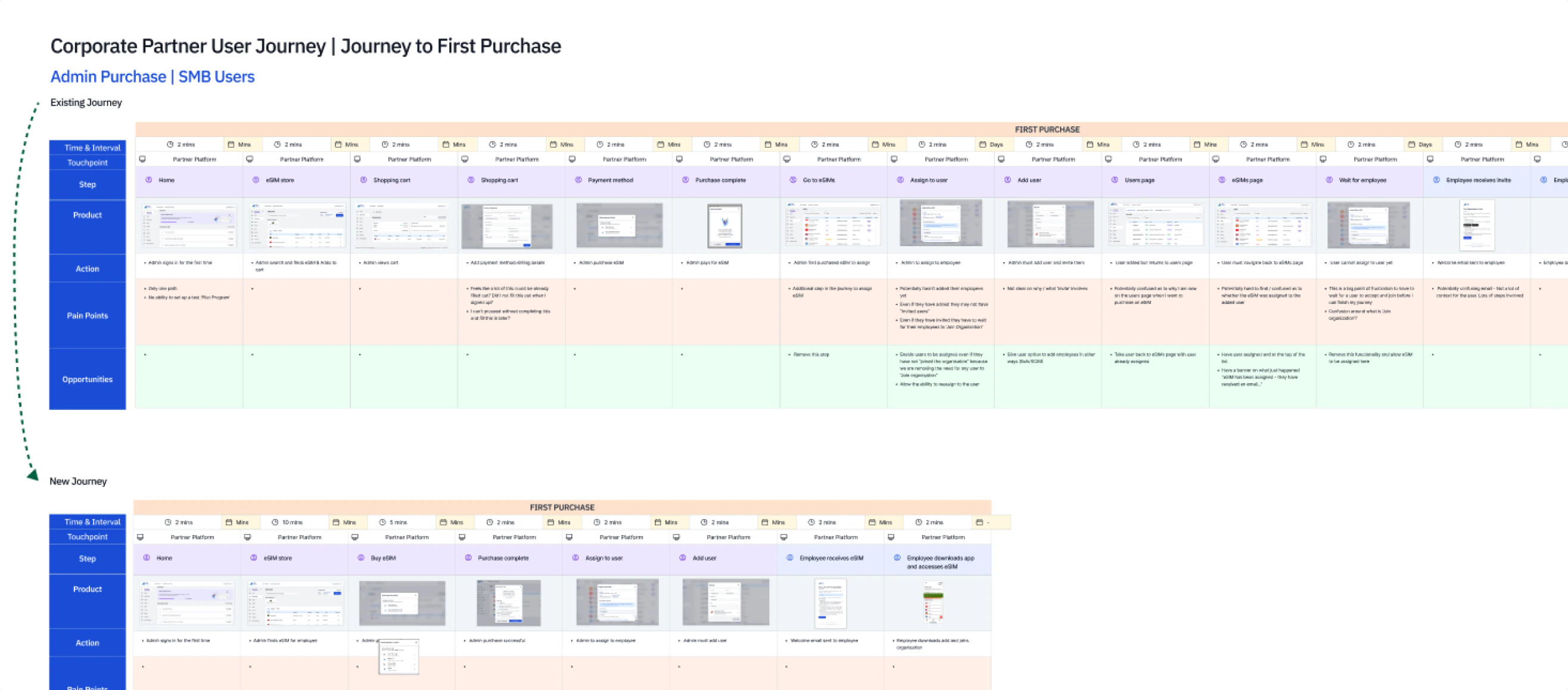
Within six weeks of the first improvements shipping, employee join rate was up, time to first purchase was down, and onboarding-related support demand had fallen.
- Employee join rate up 38%
- Time to first purchase down 27%
- Onboarding-related support tickets down 22%
Small, targeted UX changes, driven by behavioural data, moved the numbers that mattered. That momentum fed directly into the next phase: a guided Pilot Program experience that turns onboarding into a repeatable growth lever.
Small, targeted UX changes moved the numbers that mattered.